Introduction
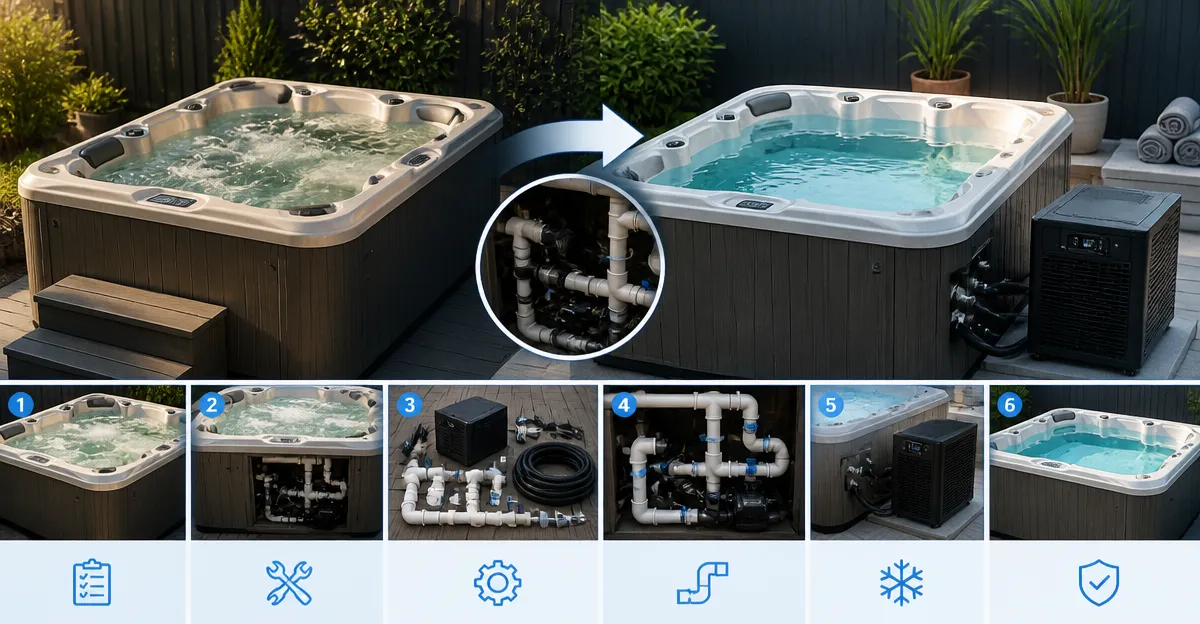
The reader will learn how to repurpose an existing hot tub into a fully functional cold plunge system without extensive construction. This guide explains each phase of the conversion, from preparation and cleaning to installing a chiller and ensuring safe operation. By following the instructions, one can achieve consistent water temperatures as low as 37°F, supporting recovery, inflammation reduction, and mental clarity. The value lies in avoiding daily ice purchases, reducing long‑term energy costs, and extending the lifespan of the original tub.
What You’ll Need
- Cold plunge water treatment such as Bio Ouster Cold Plunge Cleaner
- One of the following 1/3 HP chillers: AS ColdPlunge Chiller or AudaciaGo Cold Plunge Chiller
- Optional inflatable tub for overflow or backup, e.g., Bubplay XL Cold Plunge Tub
- Insulated cover and drainage accessories (included with most tubs)
- Basic tools: screwdriver, T‑eflon tape, level, and safety goggles
Step 1: Assess Your Hot Tub
The first task is to verify that the hot tub has compatible inlet and outlet ports, typically 1/2 inch in diameter. Measure the internal water volume; most residential tubs range from 300 to 500 gallons, which influences chiller capacity and power consumption. Confirm that the tub’s shell is free of cracks, as a leak will compromise temperature retention and may damage the chiller pump. Document the existing electrical circuit to ensure a dedicated 110 V outlet with a breaker rated for at least 15 A.
Step 2: Clean and Condition the Water
Before any mechanical installation, the water must be clear of oils, lotions, and particulate matter that can clog filters. Adding Bio Ouster Cold Plunge Cleaner provides a triple‑action formula that lifts body oils, binds fine particles, and conditions the water for a smoother feel. Use the recommended dosage of 1 oz per 100 gallons and circulate the pump for 15 minutes; this step eliminates odor and extends the interval between full drains. The product costs $29.97 and holds a 4.5‑star rating from 574 reviewers, indicating reliable performance in a variety of tub setups.
Step 3: Choose and Position the Chiller
Both the AS ColdPlunge Chiller and the AudaciaGo Cold Plunge Chiller are rated at 1/3 HP and can handle tubs up to 500 gallons, but there are subtle differences. The AS model cools to 42°F, includes a built‑in pump and washable metal filter, and retails for $399.00 with a 4.4‑star rating from 186 reviews. It excels in environments where a quiet operation is less critical, as some users note occasional noise. The AudaciaGo unit reaches 37°F, incorporates dual filtration with a 20‑micron filter, and is priced at $459.95 with a 4.4‑star rating from 133 reviews. It is ideal for users who desire the lowest possible temperature and superior debris capture. Place the chiller on a level, well‑ventilated surface near the tub, allowing at least 12 inches of clearance for airflow.
Step 4: Connect Plumbing and Power
Attach the insulated quick‑connect hoses supplied with the chosen chiller to the tub’s inlet and outlet ports. Tighten connections with T‑eflon tape to prevent leaks; a leak can cause the pump to run dry and overheat. If the hot tub lacks dedicated ports, install a bulkhead fitting using the provided drill template. Route the return hose so that it re‑enters the tub near the surface, minimizing turbulence and ensuring even temperature distribution. Plug the chiller into the dedicated circuit and verify that the LED touchscreen displays the correct target temperature before powering the pump.
Step 5: Install Insulation and Cover
To reduce heat gain from the ambient environment, drape an insulated blanket or the tub’s factory‑included cover over the surface when the system is idle. The cover’s multi‑layer construction, as seen on the Bubplay XL Cold Plunge Tub, slows temperature rise and protects the water from debris. If the hot tub is located outdoors, consider adding a simple wooden frame or insulated paneling around the sides to create a “cold plunge cabin.” This extra barrier can lower energy consumption by up to 15 % according to user reports.
Step 6: Test Temperature Control and Safety Features
Set the chiller to the desired temperature—commonly 45°F for post‑workout recovery or 37°F for advanced cold‑therapy protocols. Allow the system to run for at least two hours while monitoring the water temperature with a calibrated floating thermometer. Verify that the chiller maintains the set point within ±2°F; if the display deviates, consult the troubleshooting section. Ensure that the tub’s electrical components are protected by a ground‑fault circuit interrupter (GFCI) and that all cords are out of the water’s path.
Tips & Pro Tips
- Schedule a weekly dose of Bio Ouster Cold Plunge Cleaner to keep water clarity high and reduce the frequency of full drains.
- When using the AudaciaGo chiller, replace the 20‑micron filter every three months for optimal flow and temperature stability.
- Position the chiller’s submersible pump (included with the AS model) on the low side of the tub to avoid cavitation and prolong pump life.
- Run a short “warm‑up” cycle after each plunge by increasing the temperature to 60°F for five minutes; this helps the body transition safely.
- Document power usage with a plug‑in meter; users typically see a 0.5‑kW draw, which translates to roughly $5 per month in most U.S. regions.
Troubleshooting
Problem: Water temperature does not reach the set point.
Solution: Verify that the ambient temperature is not exceeding the chiller’s design limits; improve insulation or reduce water volume.
Problem: Chiller displays a temperature three degrees higher than a floating thermometer.
Solution: Calibrate the internal sensor using the manufacturer’s reset procedure, or rely on the external thermometer for precise readings.
Problem: Pump makes excessive noise.
Solution: Ensure the hose is fully submerged and free of air pockets; if noise persists, consider installing a vibration‑isolating mat beneath the chiller.
Conclusion
The guide has demonstrated how to convert a conventional hot tub into a high‑performance cold plunge system using affordable, commercially available components. By cleaning the water with Bio Ouster Cold Plunge Cleaner, installing a reliable 1/3 HP chiller, and adding proper insulation, one can enjoy therapeutic temperatures year‑round. The process emphasizes safety, energy efficiency, and long‑term maintenance, enabling users to reap the recovery benefits of cold water immersion without the recurring cost of ice.
Frequently Asked Questions
What size chiller is recommended for converting a hot tub to a cold plunge?
A 1/3 HP chiller, such as the AS ColdPlunge or AudaciaGo models, works well for most hot tubs.
How low can the water temperature be after conversion?
The system can maintain water temperatures as low as 37 °F.
Do I need to buy ice for the cold plunge once a chiller is installed?
No, the chiller eliminates the need for daily ice purchases.
What water treatment should I use to keep the cold plunge clean?
Use a cold‑plunge‑specific cleaner like the Bio Ouster Cold Plunge Cleaner.
Can an inflatable tub be used as overflow or backup?
Yes, an inflatable tub can serve as an overflow or backup reservoir.