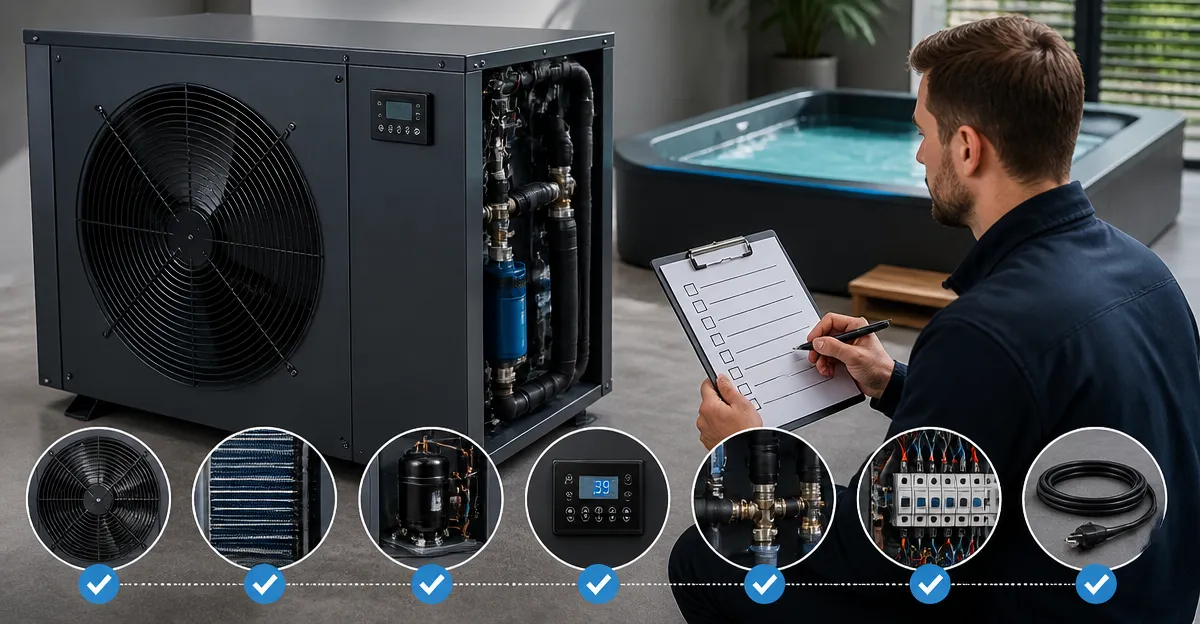
How to Buy a Used Cold Plunge Chiller: Essential Buying Checklist & Inspection Tips
Purchasing a used cold plunge chiller can provide a cost‑effective entry into regular cold‑therapy practice. This guide explains the critical factors to evaluate, the tools that simplify the inspection process, and how to avoid common pitfalls. By following the checklist, one can ensure that the unit delivers reliable performance, safety, and long‑term value.
Cold plunge therapy supports muscle recovery, reduces inflammation, and can improve sleep quality. However, a malfunctioning chiller defeats these benefits and may increase electricity costs. The steps below empower the buyer to assess a used unit with the same rigor applied to new equipment, while also highlighting optional accessories that streamline the evaluation.
What You'll Need
- Digital thermometer (range 0‑150°F) to verify water temperature.
- Clear PVC tubing and hose clamps for temporary connections.
- Portable power strip with surge protection.
- Cleaning supplies: non‑abrasive brush, mild detergent, and a bucket.
- Reference chiller for comparison – see the product recommendations in the steps below.
Step 1: Define Your Requirements
Before inspecting any unit, one should establish the intended use case. Determine the maximum water volume, desired temperature range, and location of installation. A typical home setup ranges from 40 to 80 gallons, with a target temperature of 42°F to 58°F. Knowing these parameters guides the evaluation of compressor power, hose length, and insulation needs.
For most residential users, a 1/3 HP compressor provides sufficient cooling capacity while keeping energy consumption modest. If the intended tub exceeds 80 gallons, a larger unit may be necessary, but the price differential is often substantial. By defining the volume and temperature goals, one can quickly eliminate units that are under‑powered or oversized for the space.
Step 2: Verify Power Rating and Cooling Capacity
The heart of any cold plunge system is the compressor. Confirm that the advertised horsepower matches the unit’s label and that the motor runs without unusual noises. A reliable reference model is the EONIX Ice Bath Chiller. It features a 1/3 HP compressor capable of cooling up to 79 gallons to 42°F, and it is priced at $289.99 with a 4.4‑star rating based on seven reviews.
When inspecting a used chiller, request documentation of the original specifications and compare them to the label on the unit. A mismatch may indicate a replacement motor or a mis‑represented model. Additionally, ask the seller whether the unit has been operated continuously or intermittently, as constant use can reveal early wear on the compressor.
Step 3: Inspect the Filtration System
Clean water is essential for both hygiene and pump longevity. The AS ColdPlunge Chiller includes a built‑in washable metal mesh filter and a submersible pump. Priced at $399.00 with a 4.3‑star rating from 169 reviews, it demonstrates how an integrated filter simplifies maintenance.
During inspection, remove the filter housing and examine the mesh for tears or corrosion. Verify that the filter can be detached without tools, as this indicates a user‑friendly design. If the used unit lacks a filter, consider purchasing an external cartridge filter similar to the one described in the positive EONIX reviewer’s modification. A well‑maintained filter prevents debris from clogging the pump and preserves cooling efficiency.
Step 4: Test Temperature Control and User Interface
Accurate temperature regulation is the most visible performance metric. The FADHOLE Ice Bath Chiller offers a digital control panel, LED display, and a 1/3 HP compressor for up to 79 gallons. It is listed at $329.99 with a 4.7‑star rating from 18 reviews.
Connect the chiller to a small water container, set the desired temperature, and monitor the thermometer for at least 30 minutes. The displayed temperature should remain within ±2°F of the set point. If the unit uses a touchscreen, ensure that the interface responds without lag, as delayed input can lead to temperature overshoot.
Step 5: Evaluate Noise Level and Energy Consumption
Quiet operation is important for home environments, especially when the chiller is placed near living spaces. The The Pod Company Chiller consumes only 280 watts and is praised for low‑noise performance. It is priced at $600.00 with a 3.9‑star rating from 162 reviews.
During the test, place a decibel meter or a smartphone app near the unit and record the sound level after the compressor reaches steady state. Values below 55 dB are generally acceptable for indoor use. Compare the reading with the seller’s claim; a significant discrepancy may indicate worn bearings or a loose fan.
Step 6: Check Warranty, Support, and Documentation
Even a used unit can benefit from manufacturer support. The AzureaFlow Ice Bath Chiller provides a 2‑year service agreement, remote control, and a comprehensive after‑sales team. It costs $299.99 and holds a 4.3‑star rating from six reviews.
Ask the seller for the original warranty card and any service records. If the warranty is transferable, confirm the remaining period and the process for filing a claim. A responsive support team can reduce downtime if a component fails shortly after purchase.
Tips & Pro Tips
- Measure the actual water volume of the tub and compare it to the chiller’s rated capacity; oversizing leads to unnecessary energy use.
- Inspect the insulated hoses for cracks or kinks. Replacing damaged hoses with high‑quality insulated tubing restores efficiency.
- Run the unit for at least 24 hours before final acceptance to observe long‑term temperature stability.
- Consider adding an external carbon filter if the water source is hard; this prolongs the life of the internal filter.
- When the unit is located outdoors, use a weather‑proof cover to protect the electronics from moisture.
Troubleshooting Common Issues
| Problem | Possible Cause | Solution |
|---|---|---|
| Water does not reach target temperature | Insufficient coolant flow due to clogged filter | Clean or replace the filter; verify pump operation. |
| Excessive noise | Loose fan blade or worn compressor bearings | Tighten mounting screws; replace fan or contact service. |
| Temperature reading fluctuates | Faulty temperature sensor or touchscreen | Reset the unit; if issue persists, replace sensor module. |
Conclusion
Buying a used cold plunge chiller requires systematic evaluation of power, filtration, temperature control, noise, and support. By following the checklist and employing the recommended tools, one can acquire a reliable unit at a fraction of the cost of a new model. Remember that thorough testing, clear documentation, and an understanding of warranty options protect the investment and ensure consistent therapeutic benefits.
Products Mentioned in This Guide
Frequently Asked Questions
What is the first step in inspecting a used cold plunge chiller?
Check the exterior for visible damage, corrosion, and ensure all components (pump, hoses, controls) are intact.
How can I confirm the chiller’s temperature accuracy?
Use a digital thermometer (0‑150°F range) to measure water temperature while the unit runs and compare it to the setpoint.
What signs indicate possible electrical problems?
Look for frayed cords, burnt connectors, inconsistent power draw, or error codes on the control panel.
Which accessories are essential for a thorough inspection?
A digital thermometer, clear PVC tubing with hose clamps, a surge‑protected power strip, and basic cleaning supplies.
How do I evaluate the overall condition and remaining lifespan of a used chiller?
Inspect maintenance records, ask about usage hours, listen for abnormal noises, and test performance over a full cooling cycle.